
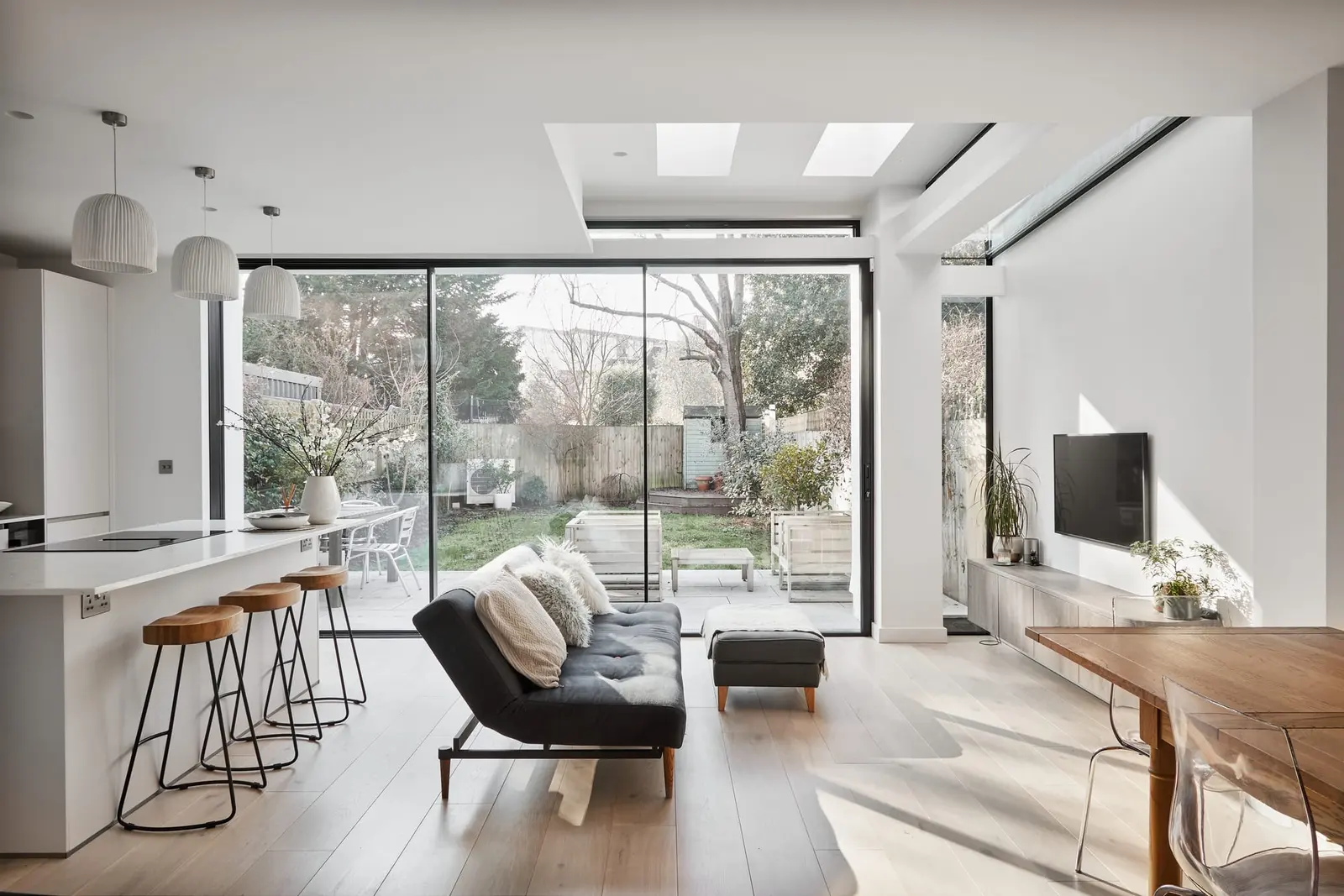
When you buy bifold doors, the first big decision is the frame material: aluminium or uPVC. Both can look great and let in plenty of light, but they perform very differently. Here is a straight comparison across the things that matter most — strength, frame width, lifespan, energy efficiency and cost — so you can choose with confidence. In the interest of transparency, every bifold door we make is aluminium.
Aluminium vs uPVC: the short answer
For most projects aluminium is the better long-term choice: it is stronger, has slimmer frames and more glass, and typically lasts longer. uPVC is cheaper up front and can be a sensible option for smaller openings or tighter budgets. The right pick depends on your opening size, your budget and how long you plan to keep the doors.
| Aluminium bifold doors | uPVC bifold doors | |
|---|---|---|
| Frames | Slim, so more of each panel is glass | Bulkier to stay rigid, so less glass |
| Panel size | Large panels: up to 1200mm wide on Cortizo and 1500mm on the Schüco AS FD 75/90.HI | Bulkier frames limit panel size and make very wide openings harder |
| Durability | Does not warp, sag or discolour; powder coating needs only occasional cleaning | Can warp, sag or discolour in sunlight over time |
| Energy efficiency | Thermally broken frames meet Part L with double or triple glazing | Naturally insulating; well-made systems meet Part L too |
| Up-front cost | Higher: from around £2,400 for a 2-panel set, supplied and fitted inc VAT | Lower, which is its main advantage |
Strength and frame width
Aluminium is far stronger than uPVC, so the frames can be much slimmer while still supporting large, heavy panes of glass. That means more glass, more light and a sleeker, more modern look. uPVC is a softer material, so frames have to be bulkier to stay rigid, which reduces the glass area and can look chunkier. Aluminium also handles larger openings and lower, flush thresholds more easily — see our guide to bifold doors for an extension.
Lifespan and durability
Aluminium does not warp, sag or discolour in sunlight the way uPVC can over time, and a powder-coated aluminium frame needs little more than occasional cleaning. Quality aluminium bifolds are generally expected to outlast uPVC, but lifespan and guarantee terms vary by system and installer, so compare the written guarantees you are offered rather than relying on general figures.
Energy efficiency
Both modern aluminium and uPVC systems can be very energy efficient. Quality aluminium bifolds use a thermal break — an insulating barrier inside the frame — to stop heat escaping, and with double or triple glazing they meet current UK Building Regulations. uPVC is naturally insulating too, so for energy performance alone there is little practical difference between well-made systems.
Aluminium bifold door U-values
In England, new and replacement external doors in existing homes and extensions need a U-value of 1.4 W/m²K or better under Approved Document L, whichever material you choose. For the aluminium systems we make, the Schüco AS FD 75/90.HI has a U-value of 1.0 W/m²K, the Cortizo Bifold Plus reaches 0.8 W/m²K with its 45mm thermal break, and the Schüco ASS 70 FD goes as low as 1.3 W/m²K. Our bifold doors and building regulations guide explains the other rules that apply.
Aluminium vs uPVC bifold door cost
uPVC bifold doors are cheaper to buy, which is their main advantage. Aluminium costs more up front: as a guide, our aluminium bifolds start from around £2,400 for a 2-panel set, with most 3–4 panel doors between £3,000 and £6,000 supplied and fitted including VAT (see the full bifold door cost guide). When you factor in the slimmer frames, lower maintenance and longer life, the gap narrows over the life of the doors.
Aluminium or uPVC: which should you choose?
- Choose aluminium bifold doors if: you want slim frames and maximum glass, a large opening, a low threshold, the longest lifespan, or a premium modern look
- Choose uPVC if: you have a smaller opening, a tighter budget, and are happy with chunkier frames and a shorter expected lifespan
- Either way, look for a thermally broken frame, quality double or triple glazing, and installation certified under a competent person scheme such as FENSA or CERTASS, or signed off by building control
Aluminium vs uPVC doors more generally
The same trade-off applies to other glazed doors. Aluminium patio doors, sliding or bifold, and aluminium French doors have slimmer frames than uPVC for the same opening, so more of the door is glass, and they will not warp or need repainting; uPVC costs less to buy. For a wide opening onto the garden, the frame strength of aluminium matters most; our external bifold doors page covers the thresholds, opening direction and U-values for an outside wall.
Fitting the doors yourself, or buying for a client? Our supply-only aluminium bifold doors are made to measure on Schüco and Cortizo systems for installers, builders and homeowners with their own fitter.
Frequently asked questions
Are aluminium bifold doors better than uPVC?
For most openings, yes: aluminium is stronger, so the frames are slimmer, the panels can be larger and the doors do not warp or discolour. uPVC is cheaper up front and can suit a small opening on a tight budget.
What U-value do aluminium bifold doors have?
It depends on the system and glazing. In England, replacement external doors need 1.4 W/m²K or better. Of the systems we make, the Schüco AS FD 75/90.HI is 1.0 W/m²K and the Cortizo Bifold Plus reaches 0.8 W/m²K.
Are aluminium bifold doors colder than uPVC?
Not if they are thermally broken. Modern aluminium bifolds have an insulating barrier inside the frame and, with double or triple glazing, meet the same Building Regulations thermal requirements as uPVC.
Can uPVC bifold doors be used for wide openings?
uPVC frames need to be bulkier to stay rigid, which limits panel size and makes very wide openings harder. For large openings, aluminium is usually the better choice because it stays rigid with much slimmer frames.
Weighing up aluminium for your project? Send us your opening size and we will recommend the right system and provide a free, no-obligation quote.
Get a free quote