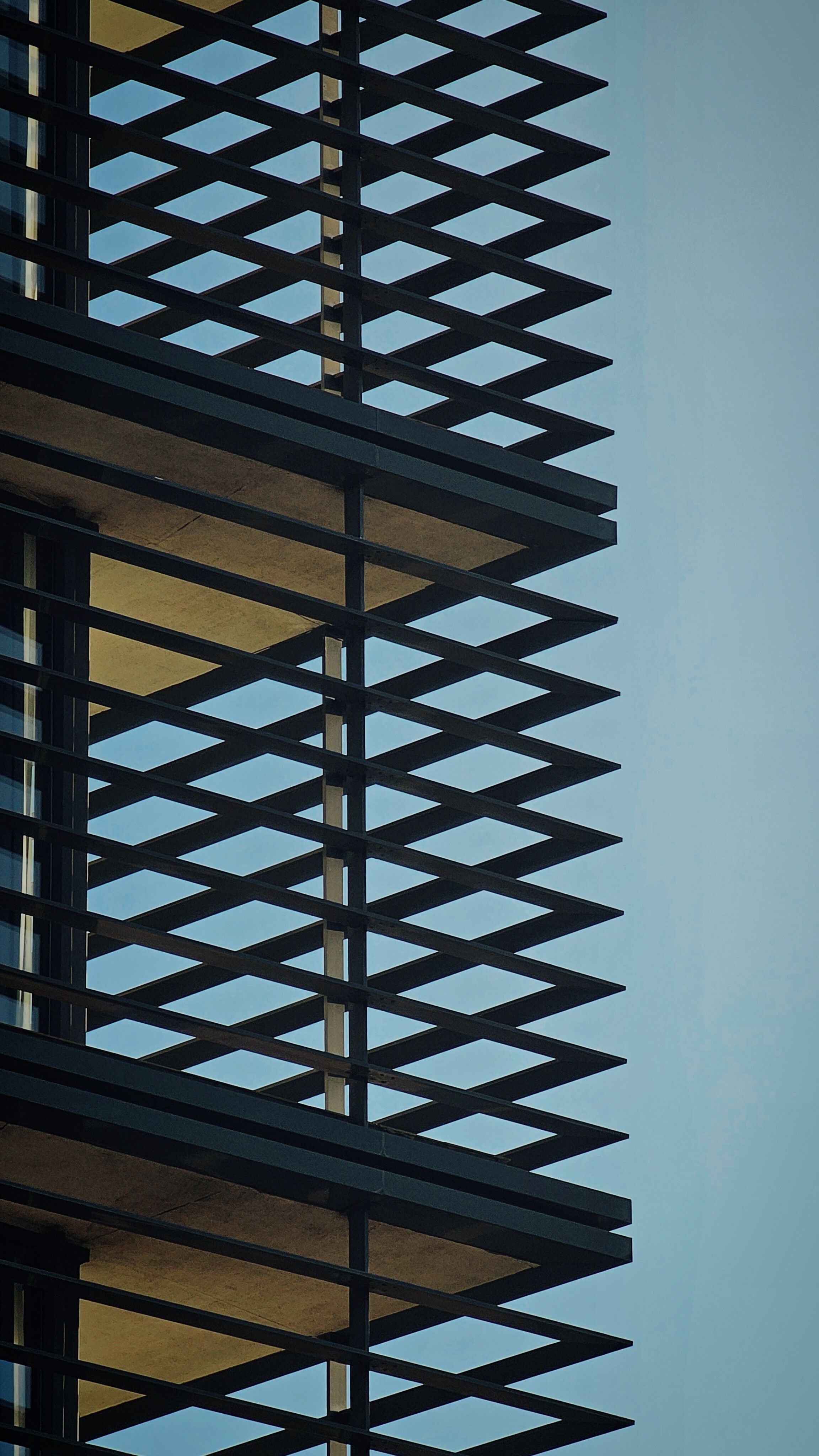
The Future Homes Standard and the updated Part O of Building Regulations (overheating) have placed solar shading firmly at the centre of commercial building design. Uncontrolled solar heat gain through large glazed facades is the primary cause of overheating in modern offices, schools and healthcare facilities — and mechanical cooling is an increasingly unacceptable response in terms of both carbon and operational cost. External aluminium brise soleil and louvres are the most effective tool available to designers to control solar gain without compromising natural light or views.
How Solar Shading Works
External solar shading is significantly more effective than internal blinds or coated glass because it intercepts solar radiation before it enters the glazing. Once solar energy has passed through glass and converted to heat inside the building, it is very difficult and energy-intensive to remove. An external brise soleil blade at the correct angle can block direct solar radiation while allowing diffuse daylight — maintaining visual comfort without the glare that drives occupants to close internal blinds.
Types of Aluminium Solar Shading
- Fixed horizontal blades — most cost-effective; sized and angled by the engineer to block summer sun angles while admitting low winter sun; best for south-facing elevations
- Fixed vertical fins — effective on east and west elevations where the sun angle is low; also provide privacy screening
- Motorised louvres — adjust angle in response to sun position or occupant preference; highest solar control performance but increased maintenance and capital cost
- Perforated metal panels — fixed screens that scatter rather than block solar radiation; provide privacy and strong architectural character
- Bespoke fin structures — cantilevered aluminium fins at varying angles and spacings; common on public buildings and cultural facilities where architectural expression is paramount
Regulatory and Assessment Framework
Part O of Building Regulations (England, 2021) requires designers to demonstrate that new dwellings and some non-domestic buildings do not overheat using either a simplified or dynamic method. CIBSE TM52 (The Limits of Thermal Comfort) provides the dynamic simulation methodology used on most commercial projects. Solar shading must be modelled accurately — blade geometry, spacing, reflectance and any motorisation control strategy all affect the predicted performance.
BREEAM (Building Research Establishment Environmental Assessment Method) awards credits under HEA 04 (Thermal Comfort) and ENE 01 (Energy Efficiency) where external solar shading forms part of a passive cooling strategy. On office projects, this is frequently a critical pathway to BREEAM Excellent or Outstanding ratings.
Design and Specification Guidance
- Commission solar shading analysis at RIBA Stage 2 — blade geometry must be determined by the building services engineer based on facade orientation and latitude
- For south-facing facades in London (51.5°N), horizontal blades at 30–45° pitch typically block solar altitude above 40° (summer months) while admitting winter sun
- Specify aluminium alloy 6063-T6 or 6005A-T6 for extruded blades — good strength-to-weight ratio and excellent powder coat adhesion
- Coordinate fixing loads with the structural engineer — brise soleil transfers significant wind and gravity loads into the facade or structure
- Allow for thermal movement — aluminium expands at 23 × 10⁻⁶/°C; a 6m blade will move 8mm between winter and summer
BDF Architectural designs and installs bespoke aluminium brise soleil, louvre and fin systems for commercial projects across the UK. Contact us early in the design process for solar analysis support and concept pricing.
Get a Free Quote